About
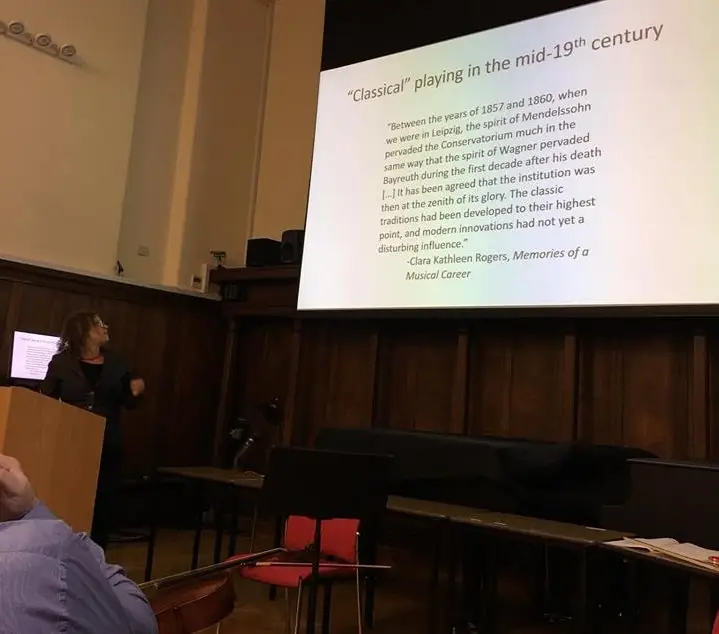
Kate Bennett Wadsworth is a scholar-performer with a fascination for the endless variety of ways in which sound can intersect with meaning. She grew up in Boston, USA, in a house full of puns, and spent most of her childhood trying to sound like her favourite singers on the cello (mostly Pavarotti) and learning how to say “I’m not crazy” in as many languages as possible. After completing a bachelor’s degree in Scandinavian Studies at Harvard University, Kate went on to study modern cello with Laurence Lesser at the New England Conservatory, baroque cello with Jaap ter Linden in the Royal Dutch Conservatory in the Hague, and 19th-century performance practice with Clive Brown at the University of Leeds.
Kate has appeared at festivals throughout Europe and North America with ensembles such as the Gabrieli Consort, B’Rock, Arion, Tafelmusik, Apollo’s Fire, Masques, and the Academy of Ancient Music, and given lecture-recitals and masterclasses at the Juilliard School, the Royal Birmingham Conservatoire, the Boston Conservatory, the Longy School of Music, and the Utrecht Early Music Festival.
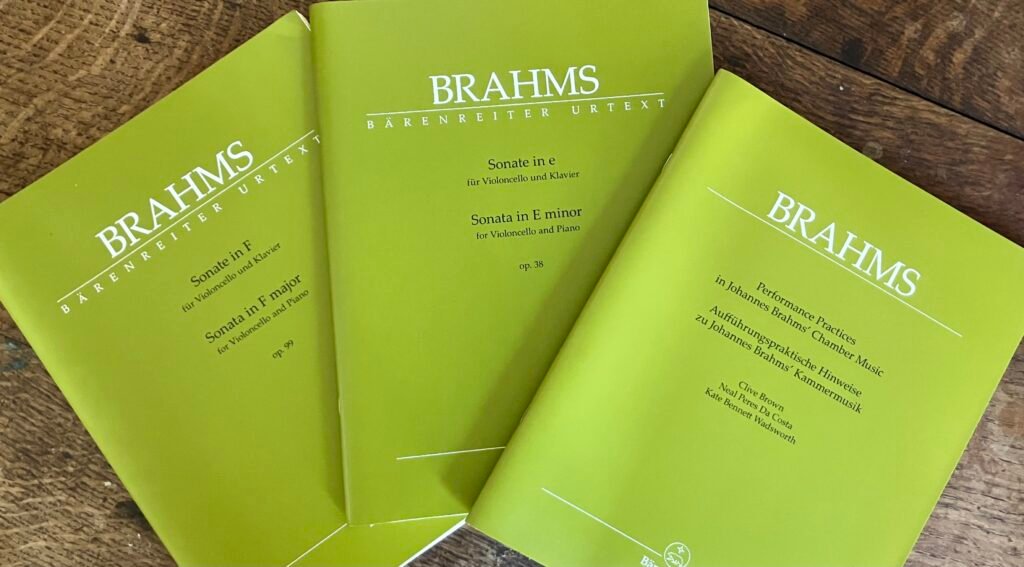
Her 2017 recording of the Brahms Cello Sonatas with pianist Yi-heng Yang, based on her study of Brahms-circle performance practices and collaborative edition with Clive Brown and Neal Peres da Costa, was praised for its “narrative quality” (Gramophone) and its “ardor and depth” (Early Music America). Kate is also a member of Trio Ilona, which performs 19th-century piano trios on period instruments, and Ensemble Unmeasured, a core group of continuo players with invited soloists, both of which have produced critically acclaimed discs on the Deux-Elles label.
Kate has recently completed a three-year research project on the Schumann Cello Concerto, called “The flexible text: reuniting oral and written traditions in 19th-century music”. Funded by the Leverhulme Trust and hosted by the Guildhall School of Music and Drama, the project examined early editions, handwritten scores, and hand-annotations to the concerto by 19th-century cellists, culminating in an article (Orpheus Institute 2024), a critical edition of the concerto, both in its original forms (cello and orchestra, cello and piano) and in Kate’s arrangement for cello and string quartet (Bärenreiter 2024), and a recording of her quartet arrangement with the Consone Quartet (Deux-Elles 2025).
Kate lives in Norwich, UK, where she directs the dynamic ensemble, Norwich Baroque, and co-runs the Deux-Elles label, while supervising doctoral students at the Guildhall School in London. She is currently embarking on a pratice-led research project on Aeolian harps in early Romantic music-making.
Early Recordings Research
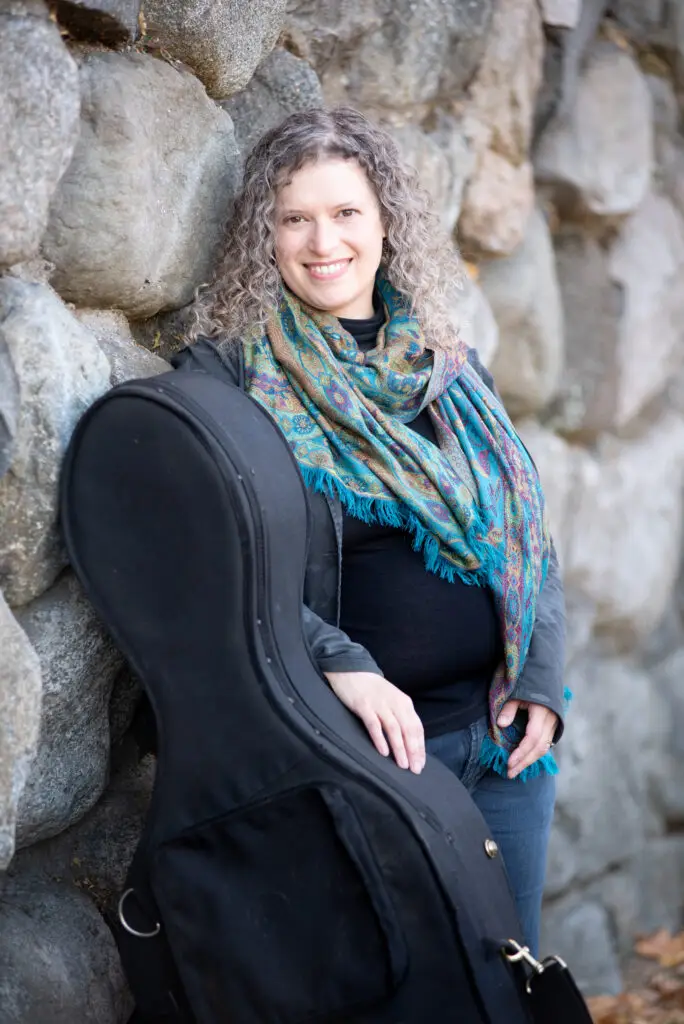
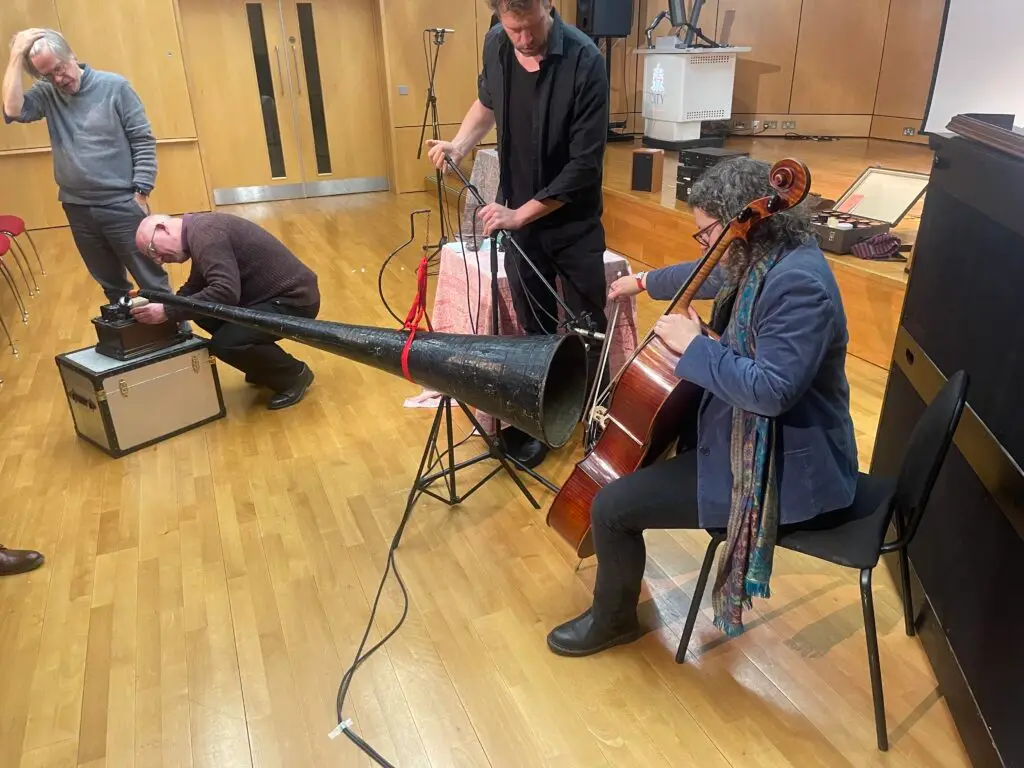
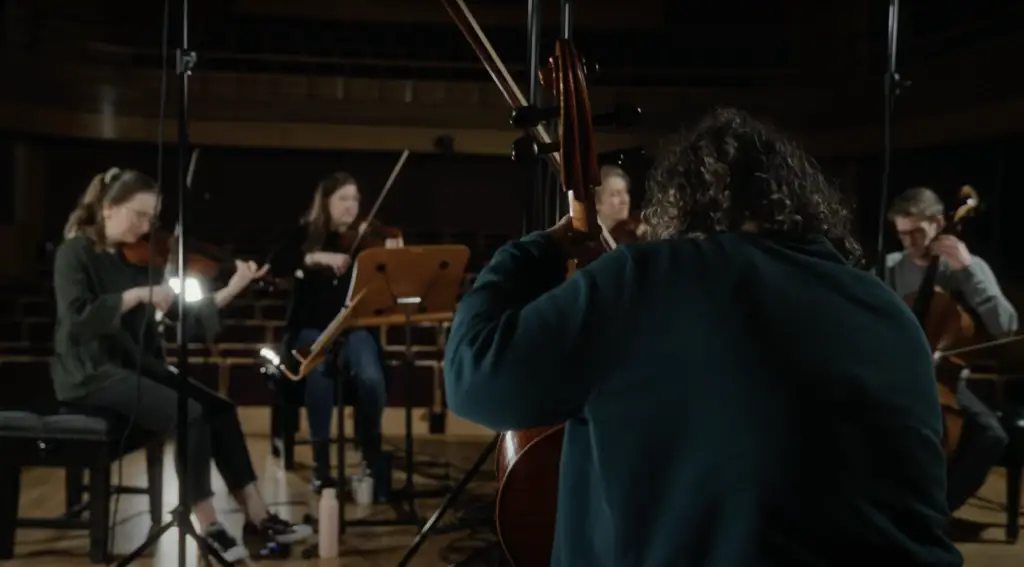
Kate is a member of the Early Recordings Association, which brings together scholars, performers, collectors, and aficionados of acoustic recordings from the beginning of the 20th century. This photo shows Kate’s playing being recorded simultaneously by acoustic recording technology (the long cone on the left) and modern microphones (on the right), allowing scholars and performers to deepen their understanding of the often mysterious sounds that survive on the earliest recordings.
Find out more about ERA here: surrey.ac.uk/early-recordings-association
Recordings and musicianship
While there is no substitute for the magic of live music, Kate is a firm believer in the potential for recordings to capture the essence of a musician’s artistic voice. As a member of the Early Recordings Association, Kate regularly takes part in experimental recordings using early acoustic technology as a way to understand the often mysterious sounds we can hear on early 20th-century records and wax cylinders, granting access to the music-making of some of the giants of the 19th century. As co-director of Deux-Elles Records, she also looks to the future of recorded art music, helping artists to craft projects that are true to themselves in every detail. Deux-Elles artists are all strongly encouraged to help decide how their sound is captured, to choose their own takes and cover art, and to write (or speak) their own booklet notes.
Musical Collaborations
The cello and gamba are team players by nature, and Kate has been fortunate to work with many of the musicians who have inspired her the most, including Rachel Podger, Enrico Onofri, Sigiswald Kuijken, and Gary Cooper. She enjoys regular collaborations with the Consone Quartet, lutenist Matthew Wadsworth, and pianist Yi-heng Yang, in addition to her work with Ensemble Unmeasured and Trio Ilona. As Artistic Director of Norwich Baroque, she rotates musical directorship among its core members and has crafted projects with collaborators as diverse as naval historians, Morris dancers, and historical novellists. Attending a concert is also a collaborative act, and Kate takes a special delight in fostering a close relationship between performers and listeners through Unmeasured Chamber Concerts, a monthly series in the intimate Octagon Chapel in her adoptive city of Norwich, UK.
Sharing knowledge
Kate teaches practice-led research at the undergraduate and graduate levels at the Guildhall School of Music and Drama in London. Students come to the Guildhall with a wide range of interests and ambitions, and she finds it exciting to watch as her practice-led research methods are abstracted and applied to areas as diverse as 18th-century harp fingerings, the 1960s folk revival, Britney Spears’ sense of rhythm, and the strangely elusive concept of developing “one’s own sound” on a string instrument. Kate also gives masterclasses, lecture-recitals, and workshops in 19th-century performance practice worldwide, including regular visits to the Juilliard School in New York. Back in Norwich, she makes a point of never turning anyone down who wishes to learn from her, leading to a delightfully eclectic group of private students.